Built for
All templates
3D · Human narrative
Sculpted Characters
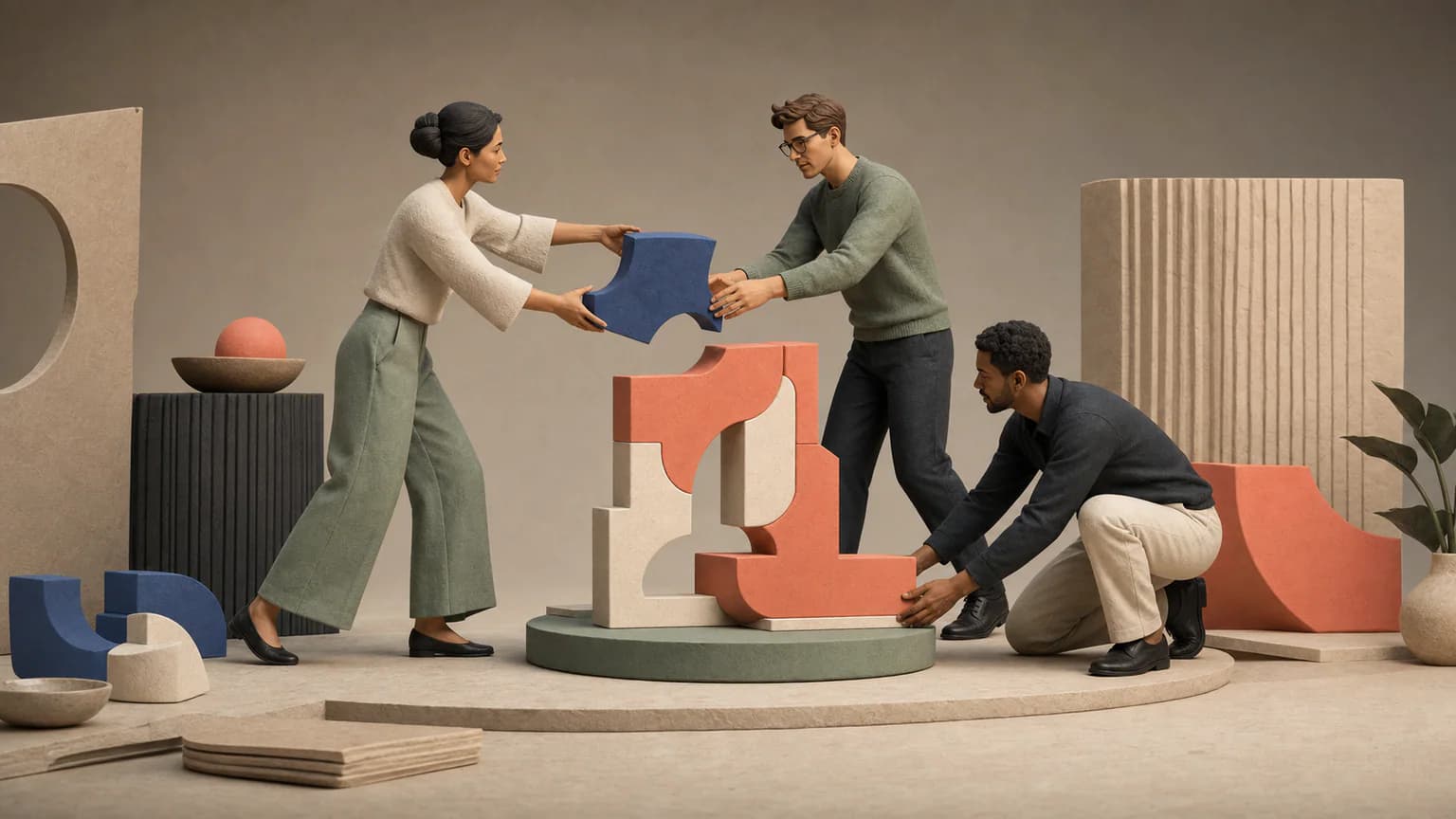
A stylized 3D character Skill for warm, legible product and workplace storytelling. Matte sculpted adults, controlled proportions, and decisive gestures provide continuity without the toy-like polish of avatar packs.
Core palette
 3D
3DVisual traits
- Stylized adults
- Matte sculpture
- Clear gestures
- Soft studio light
Output defaults
- 16:9 article canvas
- One concept per image
- Editable visual briefs
Creative direction
Use character action to explain the system.
Sculpted Characters keeps a consistent human world while changing the task, tool, and spatial relationship around the figures. Gesture must remain readable at small size, and expression stays understated so the scene carries the meaning.
Read the illustration style guideComposition grammar
Focal metaphor
Build one dominant physical metaphor around the article's central relationship.
Every image must
- adult rather than toy proportions
- one decisive interaction
- gesture readable without facial exaggeration
- coherent matte material family
Never drift into
- emoji face
- Funko-like head
- children's animation
- toy advertisement
Palette behavior
Palette 1: primary structure and focal subject Palette 2: supporting contrast and secondary forms Palette 3: accent for emphasis and directional cues Palette 4: restrained supporting accent
Example set
A recurring 3D cast performing different editorial jobs.
Character proportion and material stay stable while gesture, prop, and spatial challenge change with each passage.
3DIntroduce the role
Establish what the character is trying to do and which part of the system matters.
 3D
3DStage the interaction
Give the figures one decisive exchange with each other or with a physical system.
 3D
3DResolve through action
Show the changed outcome in posture and arrangement, not through a celebratory pose.
How it reads an article
It reads for roles, interaction, and physical consequence.
The Skill turns an abstract product or workplace idea into a staged human problem. Figures carry, connect, negotiate, climb, or reorganize tangible elements that represent the system around them.
Best fit
Use it for product stories, workplace, learning content, onboarding, collaboration, and explanations that benefit from recurring human figures.
Use another Skill when
Avoid it for documentary claims, serious investigations, luxury rendering, highly abstract philosophy, or topics where stylization would reduce credibility.
How does Sculpted Characters avoid looking like a toy advertisement?
It uses adult proportions, matte materials, restrained expression, and editorial staging. Props and gestures serve the article's argument rather than presenting a cute collectible character.
Under the surface
More than a prompt.
Each Zyncli template carries a complete set of reusable creative decisions.
Open-source SkillInstall Sculpted Characters from GitHub- 01
Article planning
Rules for choosing the passages that benefit most from an illustration.
- 02
Visual DNA
Composition, palette, subjects, line, texture, typography, and negative rules.
- 03
Prompt compiler
A structured translation from each visual brief into a model-ready instruction.
- 04
Quality checks
A template-specific rubric applied before the illustration reaches your gallery.
Continue exploring
Other visual languages.
Ready to use Sculpted Characters?