Built for
All templates
Editorial · Ink & wash
Ink Metaphor
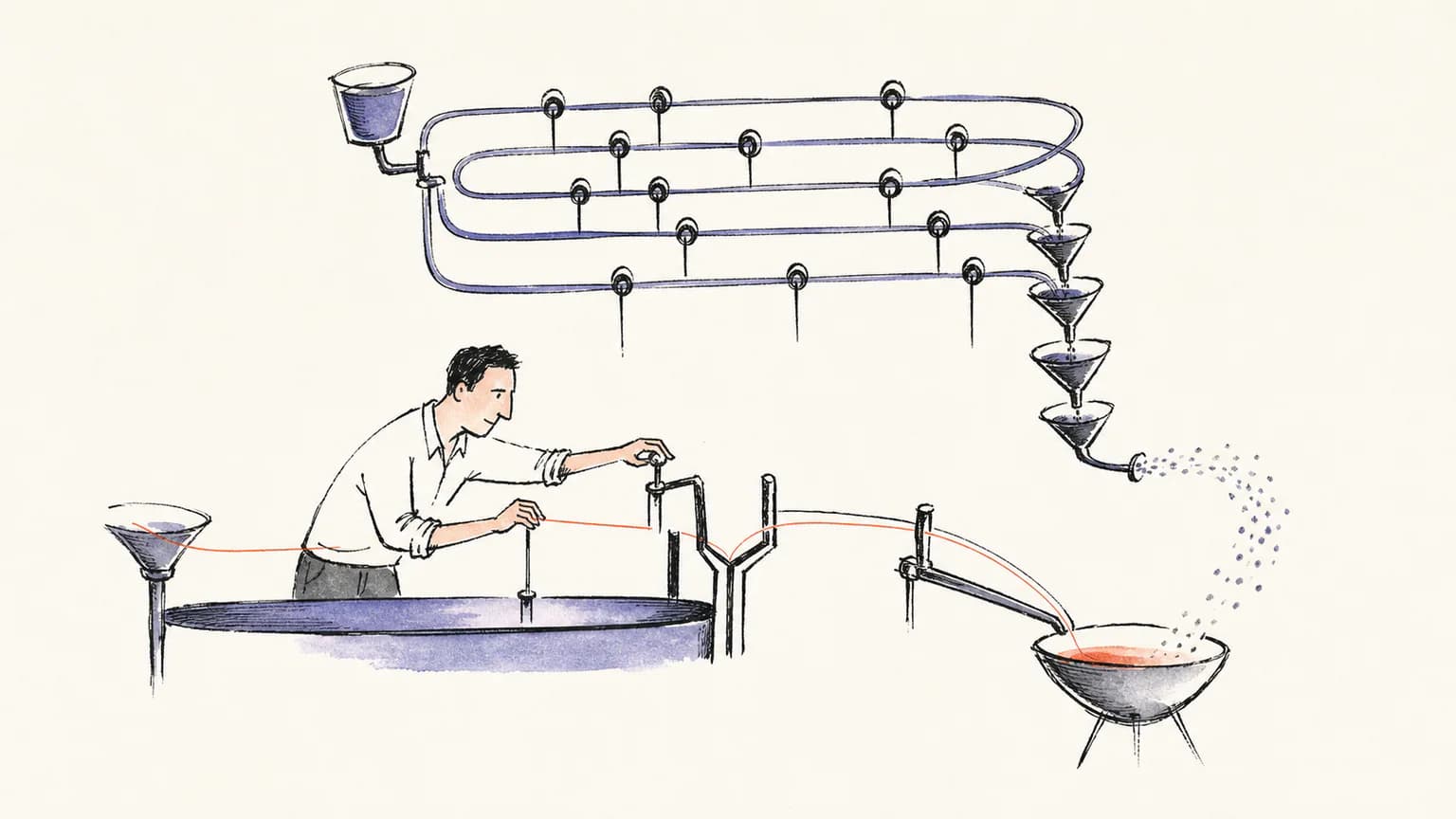
An ink-and-wash editorial Skill for complex human ideas that deserve one durable metaphor. Variable black line, selective watercolor, and adult gesture create an image that feels argued and drawn, not assembled from icons.
Core palette
 Editorial
Visual traits
- Variable ink
- Selective wash
- Surreal metaphor
- Adult gesture
Output defaults
- 16:9 article canvas
- One concept per image
- Editable visual briefs
Creative direction
Find the physical metaphor that can survive the whole argument.
Ink Metaphor begins with the article's central tension, then invents one object relationship capable of carrying it. Wash is reserved for emphasis or emotional temperature; the ink structure must remain legible without it.
Read the illustration style guideComposition grammar
Focal metaphor
Build one dominant physical metaphor around the article's central relationship.
Every image must
- one original physical metaphor
- one decisive human action
- authored ink variation
- selective rather than full watercolor wash
Never drift into
- copied reference composition
- children's-book cuteness
- mascot treatment
- comic panel
Palette behavior
Palette 1: primary structure and focal subject Palette 2: supporting contrast and secondary forms Palette 3: accent for emphasis and directional cues Palette 4: restrained supporting accent
Example set
One argument, developed through authored metaphors.
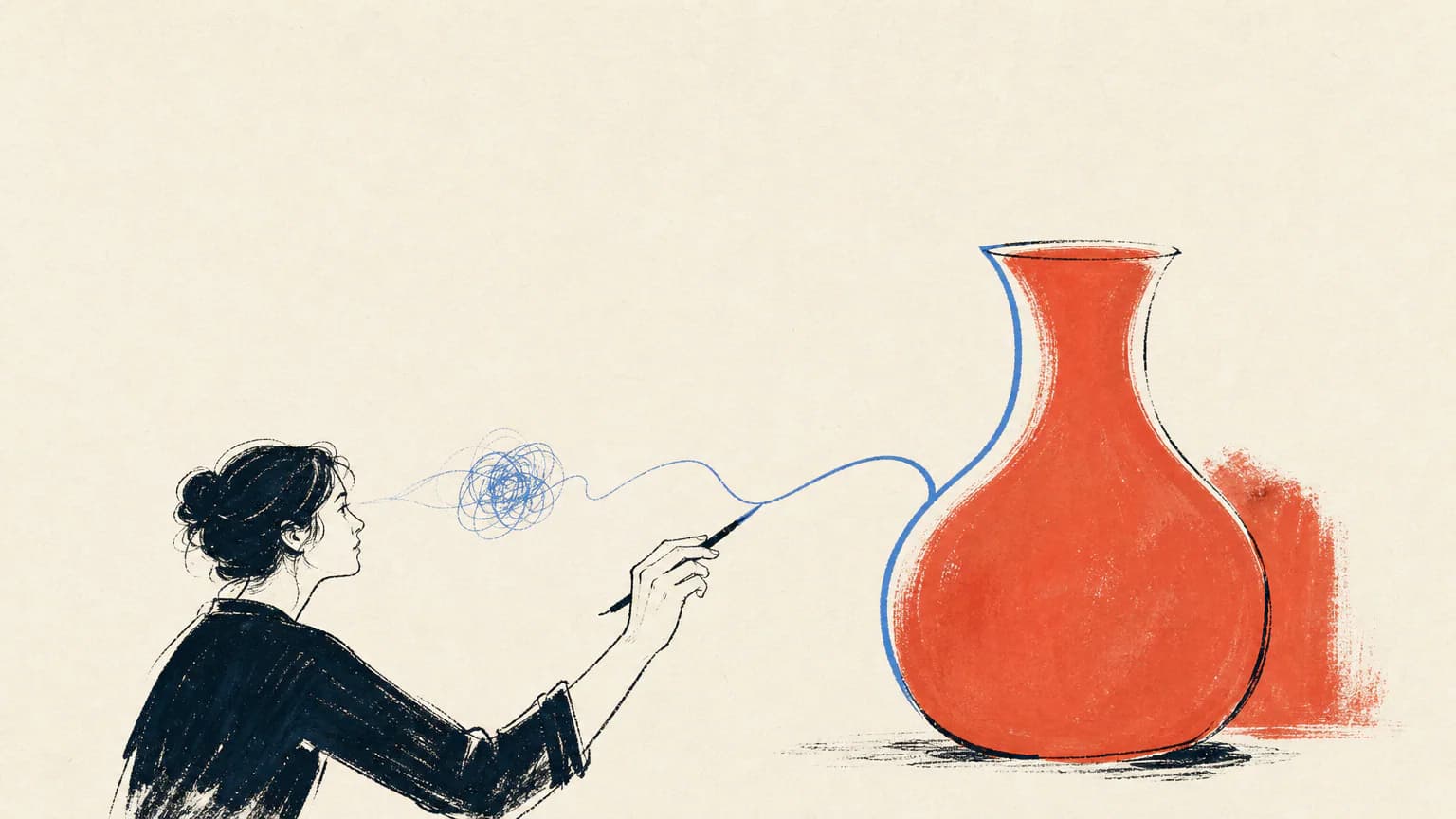
Ink behavior and selective wash unify the set while each frame invents a new physical proposition for its passage.
EditorialFrame the proposition
Build the opening claim around one object relationship with enough tension to hold attention.
 Editorial
Test the metaphor
Change the human action or pressure on the objects to explore the article's complication.
 Editorial
Leave a resonant consequence
End with a changed relationship that remains open enough for the reader to interpret.
How it reads an article
It compresses a nuanced claim into one physical proposition.
A passage about dependency might become two tools that only work when held at an uncomfortable angle. A passage about alignment might become separate paths sharing one imperfect bridge. The metaphor stays specific but not literal.
Best fit
Use it for opinion essays, psychology, culture, human-and-AI writing, and reflective arguments that need intellectual warmth.
Use another Skill when
Avoid it for dense workflows, product UI explanation, exact data, cheerful children's content, or images that need crisp brand-perfect geometry.
How is Ink Metaphor different from a generic conceptual illustration?
Its metaphor is derived from the article's specific tension and must work as a physical proposition. Variable ink, restrained wash, and adult gesture support that proposition instead of adding a decorative editorial look afterward.
Under the surface
More than a prompt.
Each Zyncli template carries a complete set of reusable creative decisions.
Open-source SkillInstall Ink Metaphor from GitHub- 01
Article planning
Rules for choosing the passages that benefit most from an illustration.
- 02
Visual DNA
Composition, palette, subjects, line, texture, typography, and negative rules.
- 03
Prompt compiler
A structured translation from each visual brief into a model-ready instruction.
- 04
Quality checks
A template-specific rubric applied before the illustration reaches your gallery.
Continue exploring
Other visual languages.
Ready to use Ink Metaphor?