Built for
All templates
Illustration · Kinetic editorial
Saturated Motion
A kinetic editorial Skill for momentum, transformation, growth, and creative work. Sweeping color fields establish direction while one expressive figure shows what movement demands from a person.
Core palette
 Illustration
Visual traits
- Kinetic curves
- Elongated figure
- Saturated fields
- Directional rhythm
Output defaults
- 16:9 article canvas
- One concept per image
- Editable visual briefs
Creative direction
Give energy a destination.
Saturated Motion begins with a source, curve, and outcome. Large color fields bend around the article's pressure or opportunity, and the figure rides, redirects, or resists that movement rather than posing inside decoration.
Read the illustration style guideComposition grammar
Focal metaphor
Build one dominant physical metaphor around the article's central relationship.
Every image must
- one dominant movement direction
- one expressive adult figure
- two to four large color fields
- visible source and destination
Never drift into
- fashion advertisement
- psychedelic pattern
- random colorful waves
- dance poster
Palette behavior
Palette 1: primary structure and focal subject Palette 2: supporting contrast and secondary forms Palette 3: accent for emphasis and directional cues Palette 4: restrained supporting accent
Example set
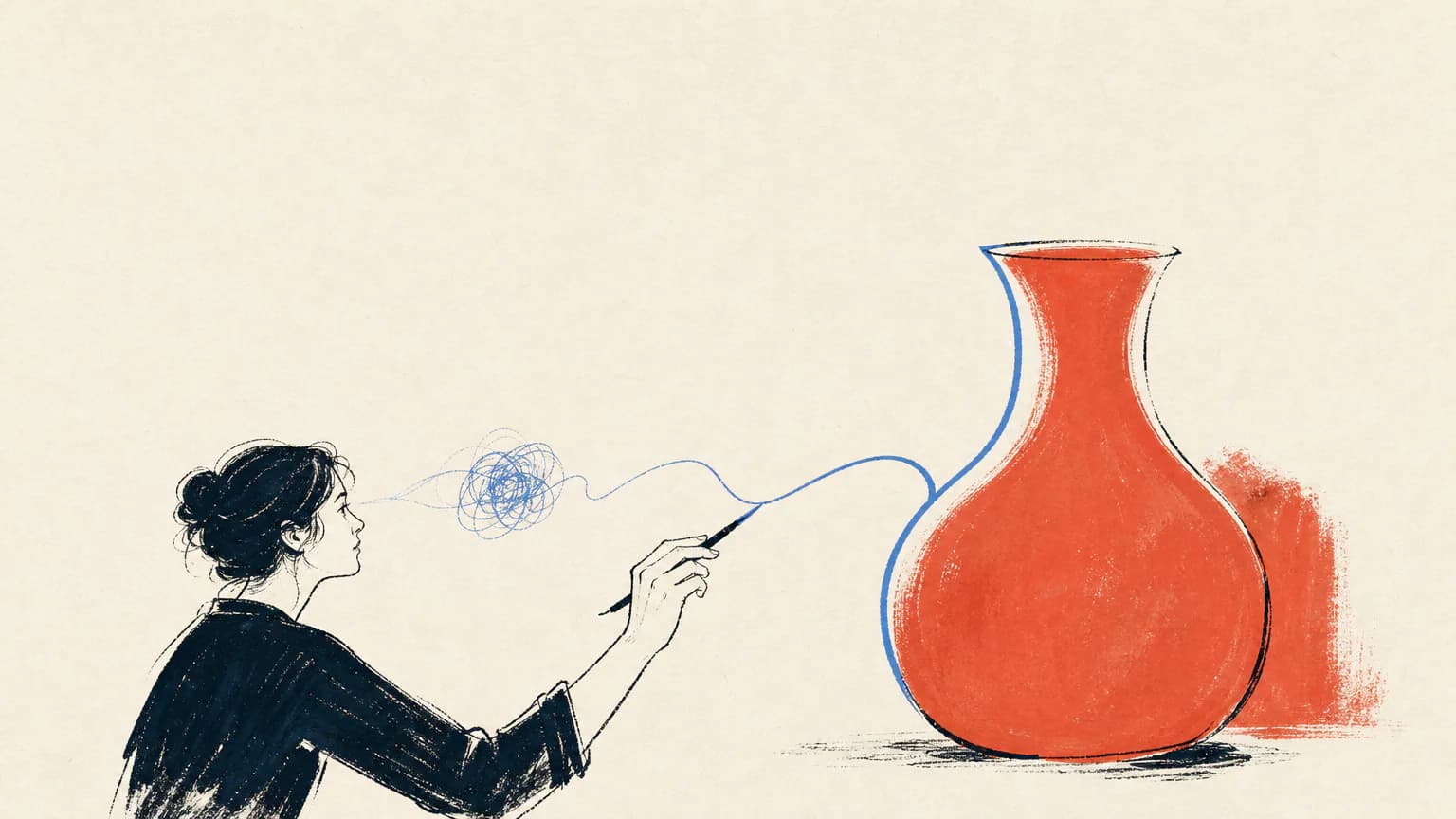
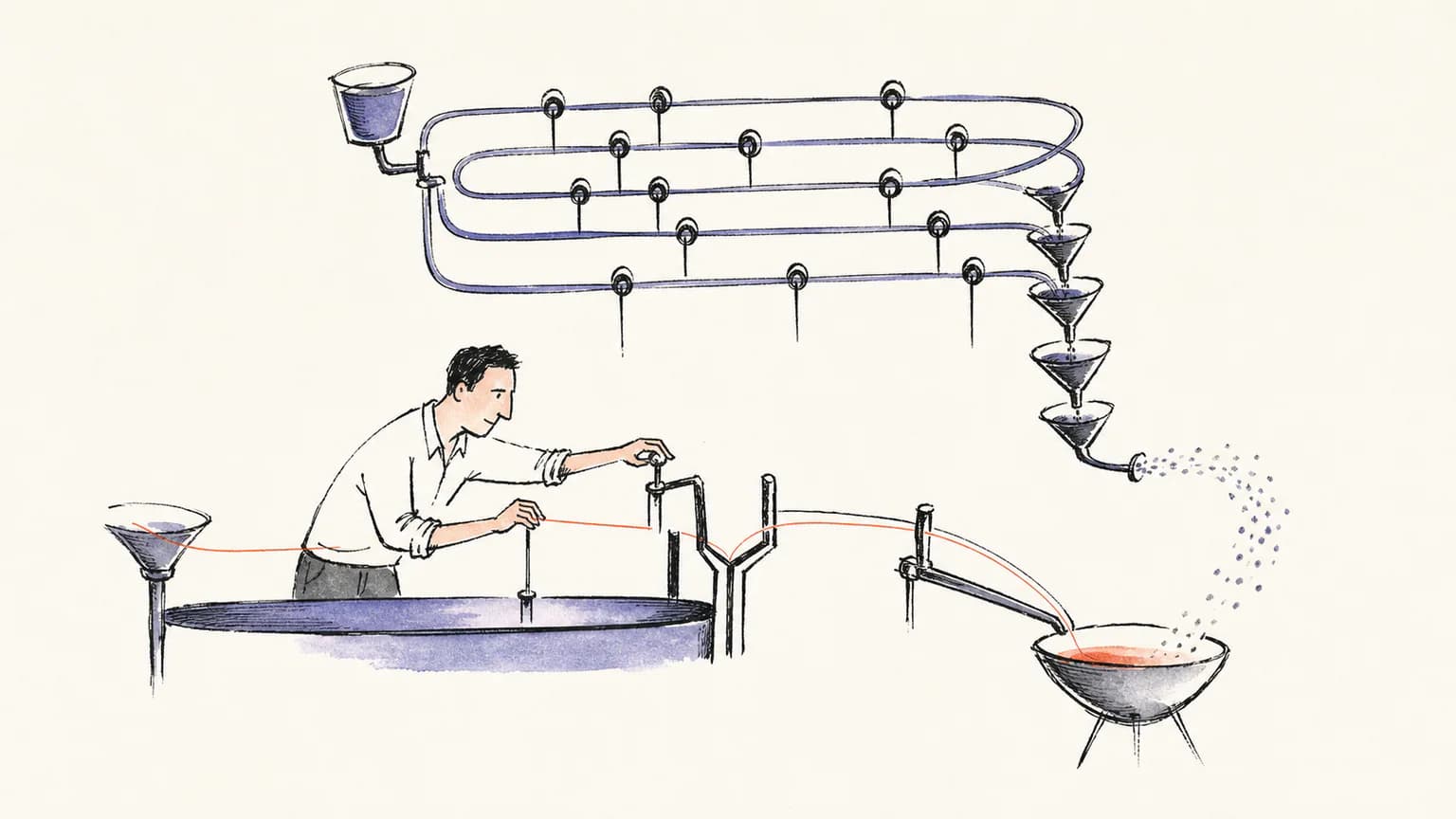
A person entering, redirecting, and owning the current.
Figure style and saturated palette remain consistent while direction, pressure, and destination change across the set.
IllustrationEstablish the current
Make the force and destination visible before asking the figure to act within it.
 Illustration
Show the active adjustment
Use posture and a changed curve to reveal the skill or decision required by the transition.
 Illustration
Carry momentum into structure
End with movement becoming a repeatable path rather than a burst of celebratory color.
How it reads an article
It turns change into a directional experience.
Creative momentum can become a work surface tilting into a rising current; adaptation can become a figure changing posture as separate fields converge. Saturation identifies forces and stages, not mood alone.
Best fit
Use it for creative practice, transformation, entrepreneurship, growth, momentum, energetic workplace stories, and editorial launches.
Use another Skill when
Avoid it for solemn testimony, exact instructions, conservative institutional reports, or arguments whose value depends on subtle evidence rather than movement.
How does saturated color remain editorial instead of decorative?
Every field represents a force, stage, or direction, and the figure's action changes in response. Color hierarchy is therefore part of the explanation, not an energetic coating applied after the idea.
Under the surface
More than a prompt.
Each Zyncli template carries a complete set of reusable creative decisions.
- 01
Article planning
Rules for choosing the passages that benefit most from an illustration.
- 02
Visual DNA
Composition, palette, subjects, line, texture, typography, and negative rules.
- 03
Prompt compiler
A structured translation from each visual brief into a model-ready instruction.
- 04
Quality checks
A template-specific rubric applied before the illustration reaches your gallery.
Continue exploring
Other visual languages.
Ready to use Saturated Motion?