Built for
All templates
Workplace · Black & white
Inclusive Monochrome
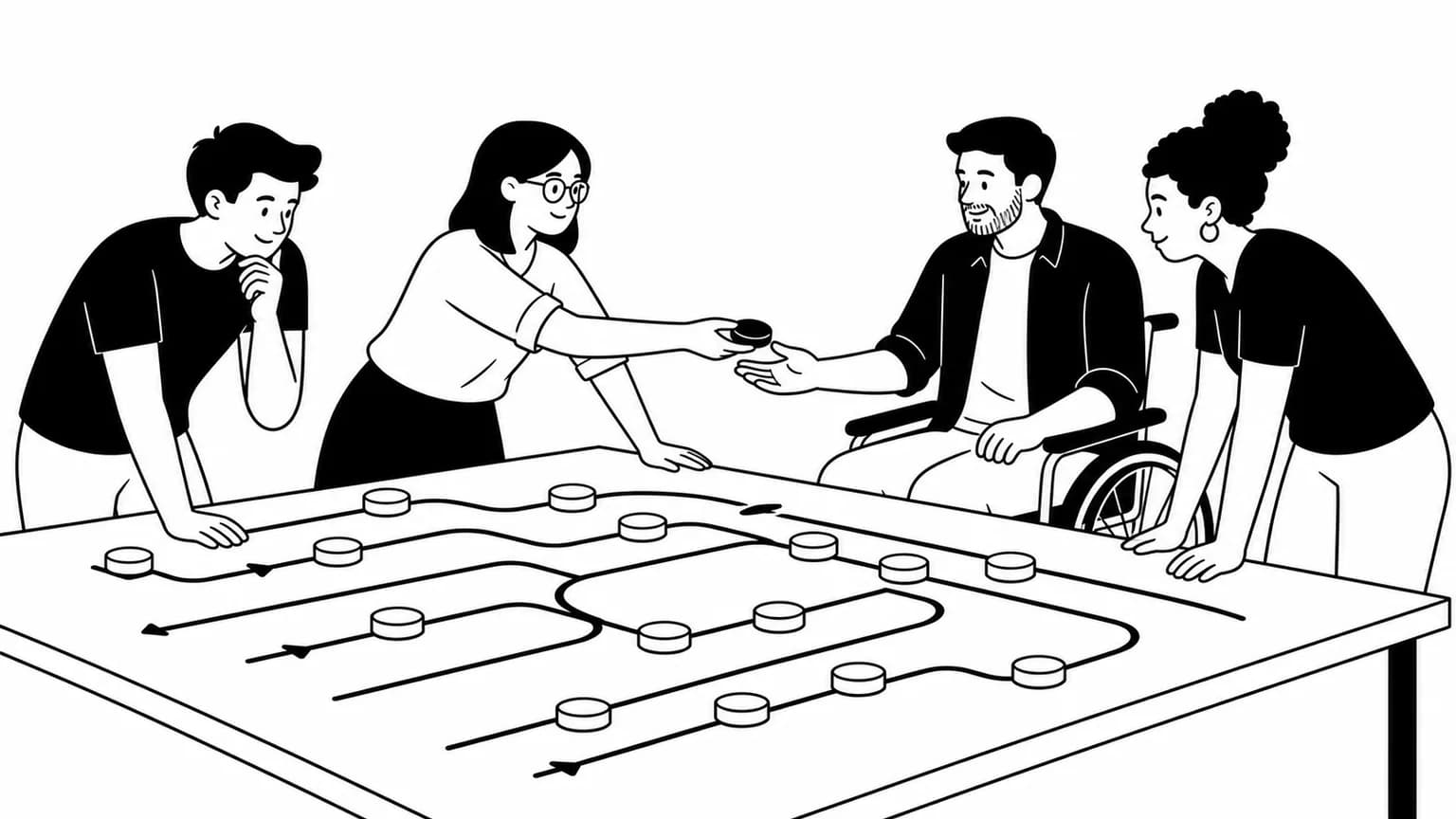
A monochrome human-centered Skill for collaboration, accessibility, and social topics. Crisp linework, confident black fills, varied adult bodies, and one specific shared action keep representation natural and editorial.
Core palette
 Workplace
Visual traits
- Black-and-white line
- Natural representation
- Readable gestures
- Open white field
Output defaults
- 16:9 article canvas
- One concept per image
- Editable visual briefs
Creative direction
Show inclusion through participation, not symbolism.
Inclusive Monochrome asks who is acting, who has access, who is being heard, and how the environment supports or obstructs them. Representation appears through credible bodies and roles inside the scene rather than through diversity-poster shorthand.
Read the illustration style guideComposition grammar
Focal metaphor
Build one dominant physical metaphor around the article's central relationship.
Every image must
- one specific human interaction
- three to five adults maximum
- body language that explains the idea
- natural varied representation
Never drift into
- diversity lineup
- corporate brochure
- generic smiling team
- exaggerated representation
Palette behavior
Palette 1: primary structure and focal subject Palette 2: supporting contrast and secondary forms
Example set
Human agency made visible in black and white.
Line, black mass, and open field remain consistent while each scene changes the form of participation.
WorkplaceEstablish who can act
Show roles and environment clearly before presenting the barrier or shared task.
 Workplace
Make the access point visible
Focus on the concrete change, tool, or gesture that alters participation.
 Workplace
Resolve through shared agency
End with people actively shaping the outcome rather than receiving symbolic inclusion.
How it reads an article
It reads for access, agency, and shared action.
A passage about accessibility becomes a person navigating or changing a real constraint. A passage about collaboration becomes a specific exchange of attention, tools, or responsibility. Gesture carries more meaning than facial performance.
Best fit
Use it for people and culture, accessibility, team collaboration, public-interest explainers, and human-centered policy content.
Use another Skill when
Avoid it for luxurious brand imagery, abstract system architecture, highly emotional portraiture, or arguments whose meaning depends on color.
How does Inclusive Monochrome handle representation responsibly?
It varies bodies and roles naturally, centers specific actions, and avoids token arrangements. Inclusion is communicated through access and agency inside the scene, not through slogans or decorative diversity cues.
Under the surface
More than a prompt.
Each Zyncli template carries a complete set of reusable creative decisions.
Open-source SkillInstall Inclusive Monochrome from GitHub- 01
Article planning
Rules for choosing the passages that benefit most from an illustration.
- 02
Visual DNA
Composition, palette, subjects, line, texture, typography, and negative rules.
- 03
Prompt compiler
A structured translation from each visual brief into a model-ready instruction.
- 04
Quality checks
A template-specific rubric applied before the illustration reaches your gallery.
Continue exploring
Other visual languages.

Ready to use Inclusive Monochrome?