Built for
All templates
Gouache Field Notes · Illustration
Gouache Illustrations for Learning and Research Articles
See gouache illustrations for learning, research, and collaboration articles. Opaque brushwork and observed gestures give each scene a painterly human focus.
No individual image prompts needed. Planning and generation use credits. View plans
Core palette
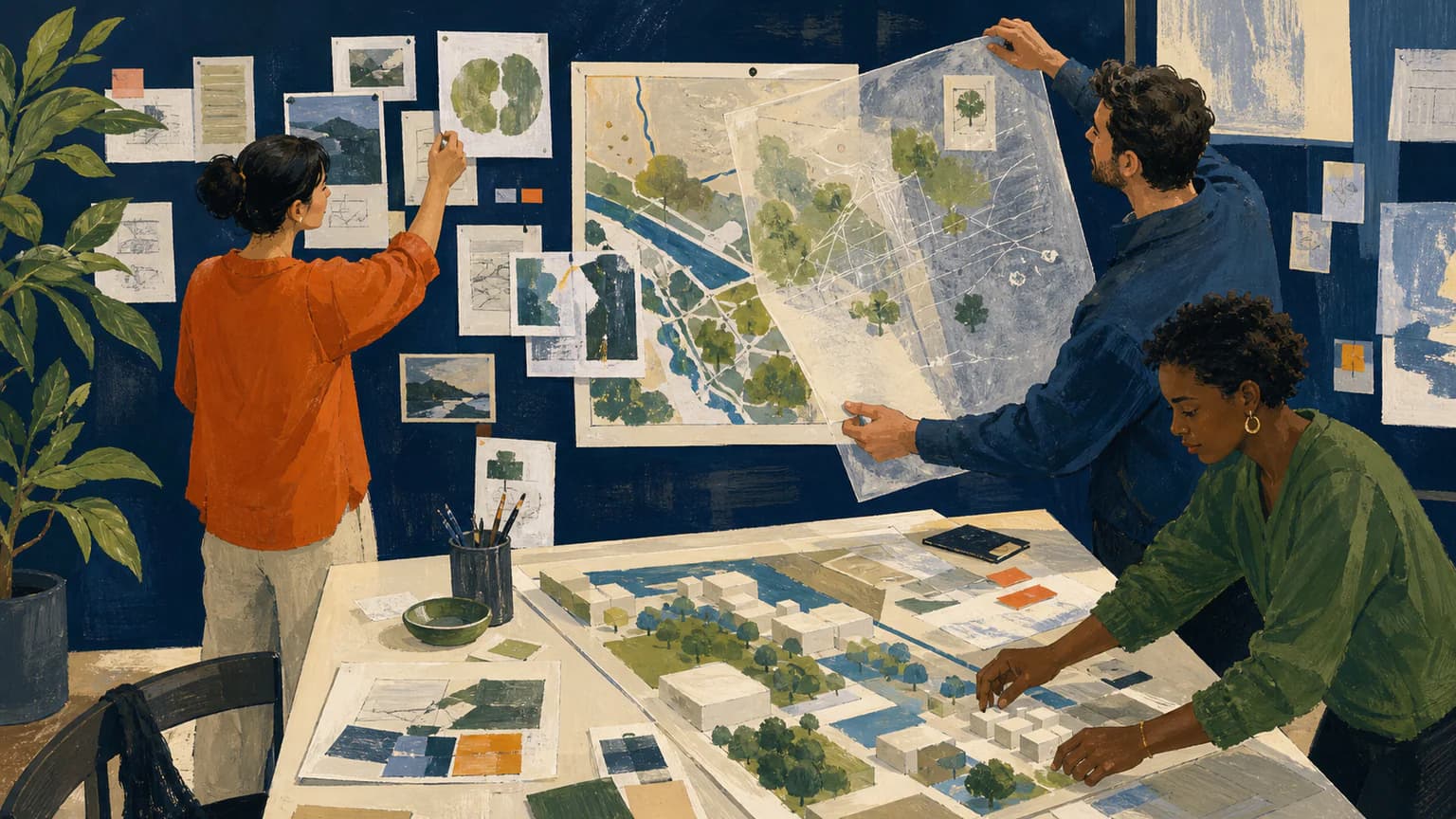 Illustration
Visual traits
- Opaque brushwork
- Observed gestures
- Material evidence
- Warm restraint
Output defaults
- 16:9 article canvas
- One concept per image
- Editable visual briefs
Choosing your article images
Is Gouache Field Notes right for your article?
Gouache Field Notes puts people in the act of looking, trying, and making sense of something. Opaque paint and restrained detail keep the scene visibly illustrated, while an observable task gives it purpose. It is suited to writing about learning with others or investigating a question, especially when the material evidence around the people matters to the argument.
An article about collaborative learning
People examining a shared object can suggest different contributions to understanding. Their actions should carry the lesson instead of a decorative gathering around a blank board.
A research process newsletter
A painterly scene of observation can introduce how a question is explored. It illustrates the process conceptually and should not be mistaken for a record of a real study.
What defines the look
Observe the work, not the meeting.
Gouache Field Notes favors a specific illustrated action, such as comparing objects or revising a model, over generic collaboration poses. Painted tools and contextual details give the scene a purpose; the scene itself is not a record of a real research activity.
Read the illustration style guideHow scenes are arranged
Focal metaphor
Build one dominant physical metaphor around the article's central relationship.
What stays consistent
- one specific research action
- credible adult gesture
- visible painted surface
- evidence arranged with purpose
Looks this style avoids
- teamwork stock pose
- children's-book faces
- corporate meeting
- digital vector finish
How color is used
Palette 1: primary structure and focal subject Palette 2: supporting contrast and secondary forms Palette 3: accent for emphasis and directional cues Palette 4: restrained supporting accent
Example set
A research story told through three acts of attention.
The painted world stays consistent while the evidence, gesture, and stage of inquiry change.
AI-generated examples of this style, not photographs of real people, events, or physical artworks.
IllustrationNotice the weak signal
Show the person encountering a small but consequential clue inside a credible working environment.
 Illustration
Test the relationship
Bring two pieces of evidence into one physical comparison and focus the scene on that action.
 Illustration
Share the revised model
End with people acting on a changed understanding rather than celebrating agreement.
How it reads an article
It reads for inquiry in motion.
The article's argument becomes a table, wall, notebook, or shared model that people actively test. Brush texture holds complexity while clear gesture preserves the editorial read.
Best fit
Use it for research stories, education, fieldwork, design practice, knowledge work, and human-centered technology.
Choose another style when
Avoid it for premium product rendering, exact data graphics, anonymous infrastructure, or stories that require photographic proof.
Before you choose
Questions about Gouache Field Notes
How does this style avoid corporate teamwork illustration?
It requires a specific task, material evidence, and believable attention. People are occupied with inquiry rather than posing as a team, and the visible gouache surface gives the scene the judgment of an illustrator.
Can a gouache illustration accompany a factual research story?
Yes, as clearly illustrative context. It does not replace photographs, records, or charts that establish the actual findings. This style is most useful for the human activity around research rather than a visual claim about results.
How do I use Gouache Field Notes for my article?
Paste your finished draft, select Gouache Field Notes, and choose a starting image count. Zyncli proposes image ideas and placements for you to review before generating. You can edit the briefs without writing each image prompt from scratch.
Does using this style cost credits?
Planning and image generation use credits, and regenerating an image uses more. You see the quoted cost before each step. Official styles do not require you to build a private brand style. See pricing for current plans and credit allowances.
From draft to image set
Bring the article.
The style is ready.
You do not need to learn the drawing technique or write every prompt. Choose this style, review the proposed scenes, and generate the images that fit your writing.
Open-source SkillInstall Gouache Field Notes from GitHub- 01
Add your finished draft
Paste the article, choose this style, and set a starting image count.
- 02
Review the proposed images
Zyncli suggests scenes and placements. Edit the visual briefs before generating.
- 03
Generate and inspect the set
Check each result for meaning, consistency, and unwanted details. Regenerate individual images when needed.
- 04
Download and publish
Place the image files beside the relevant passages. Keep accurate charts, real photos, and product screenshots where your article needs them.
Compare the alternatives
When to choose a different style
Choose Cozy Knowledge Workspace when a detailed warm interior and its tools are the main setting.
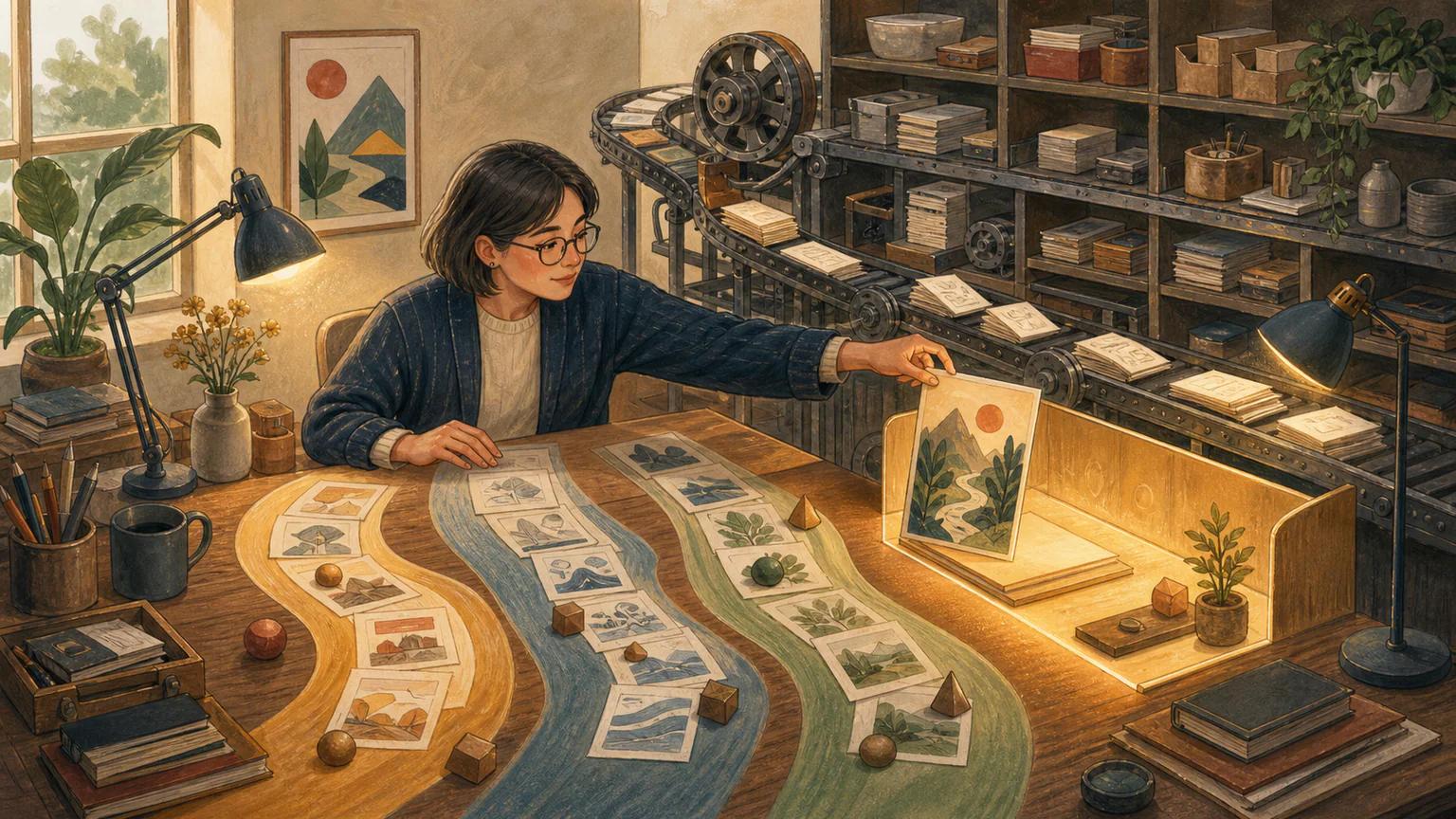 Workplace
Choose Charcoal Reportage for a more urgent investigative tone with rough monochrome marks.
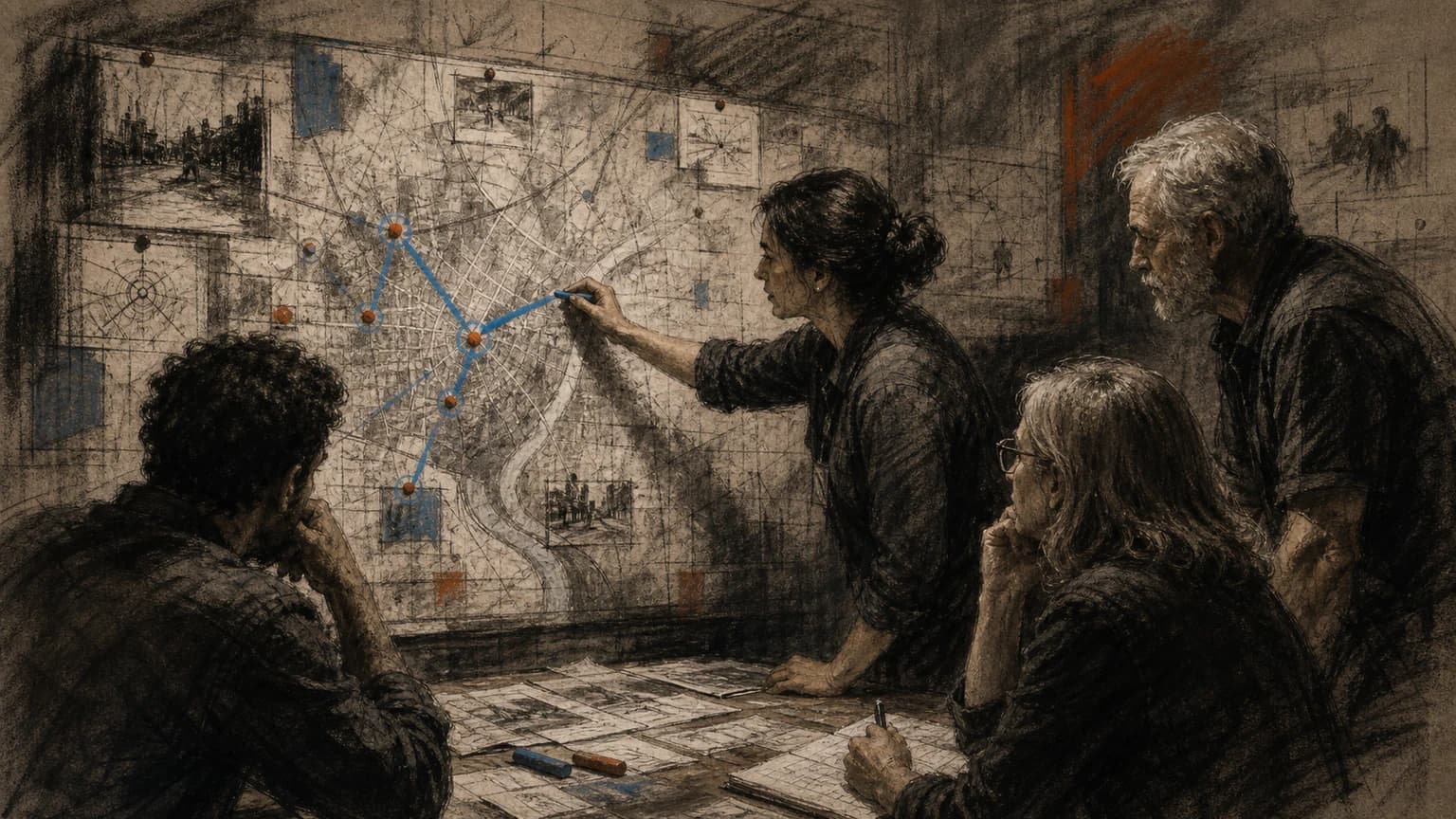 Illustration
Ready to use Gouache Field Notes?