Built for
All templates
Bauhaus Signals · Abstract
Geometric Illustrations for Strategy Articles
Explore geometric illustrations for strategy, opinion, and cultural essays. Bauhaus Signals uses circles, planes, and negative space to express tension.
No individual image prompts needed. Planning and generation use credits. View plans
Core palette
 Abstract
Visual traits
- Geometric grammar
- Strong negative space
- Limited palette
- Controlled grain
Output defaults
- 16:9 article canvas
- One concept per image
- Editable visual briefs
Choosing your article images
Is Bauhaus Signals right for your article?
Bauhaus Signals removes literal settings so the relationship becomes the subject. A circle pressing against a plane can suggest resistance; separated shapes finding balance can support a strategic argument. The limited palette and open space suit writing that needs a visual pause. Choose a more figurative style when the reader must recognize a person, place, or specific activity.
A strategy essay about competing forces
Scale and spacing can make competing priorities visible without invented quantities. Explain the specific forces in the writing, rather than treating shape size as measured data.
A culture newsletter about changing patterns
A disrupted rhythm of repeated forms can give the change a visual expression. Keep later scenes structurally different so the set does not repeat one composition.
What defines the look
Reduce the argument to a spatial verb.
Bauhaus Signals asks whether the passage is balancing, resisting, passing, splitting, converging, or being constrained. It builds one dominant physical relationship around that verb and removes every shape that does not support it.
Read the illustration style guideHow scenes are arranged
Focal metaphor
Build one dominant physical metaphor around the article's central relationship.
What stays consistent
- one spatial verb such as balance, resist, pass, split, or converge
- three to seven major shapes only
- one dominant scale relationship
- limited palette with one accent
Looks this style avoids
- random shape soup
- decorative Memphis pattern
- generic gradient blobs
- mandala symmetry
How color is used
Palette 1: primary structure and focal subject Palette 2: supporting contrast and secondary forms Palette 3: accent for emphasis and directional cues Palette 4: restrained supporting accent
Example set
Three spatial verbs, one geometric language.
Each frame uses a different relationship while disciplined scale, palette, and negative space make the sequence recognizable.
AI-generated examples of this style, not photographs of real people, events, or physical artworks.
AbstractDefine the force
Open with the dominant push, pull, imbalance, or constraint described by the article.
 Abstract
Change the relationship
Move the focal form through resistance or transition without adding decorative geometry.
 Abstract
Arrive at a new balance
Use a final stable or deliberately unstable arrangement to state the conclusion.
How it reads an article
It expresses logic through weight, distance, and direction.
A fragile consensus may become unequal masses held by one narrow support. Momentum may become a circle crossing a sequence of thresholds. Scale and negative space do the explanatory work.
Best fit
Use it for strategy, opinion, culture, change, and conceptual essays where literal imagery would narrow the reader's interpretation.
Choose another style when
Avoid it for human testimony, step-by-step instruction, accurate environments, or subjects whose identity is essential to the story.
Before you choose
Questions about Bauhaus Signals
What kinds of ideas benefit from geometric abstraction?
Ideas built around relationships rather than appearances benefit most. Geometry can preserve conceptual openness while scale, direction, and balance make the underlying argument precise.
Are these geometric images editable vector illustrations?
No. The template uses a geometric visual language, but the generated output is an image rather than separate vector paths. If you need an editable logo, exact brand geometry, or a scalable technical asset, use the appropriate design tool.
How do I use Bauhaus Signals for my article?
Paste your finished draft, select Bauhaus Signals, and choose a starting image count. Zyncli proposes image ideas and placements for you to review before generating. You can edit the briefs without writing each image prompt from scratch.
Does using this style cost credits?
Planning and image generation use credits, and regenerating an image uses more. You see the quoted cost before each step. Official styles do not require you to build a private brand style. See pricing for current plans and credit allowances.
From draft to image set
Bring the article.
The style is ready.
You do not need to learn the drawing technique or write every prompt. Choose this style, review the proposed scenes, and generate the images that fit your writing.
Open-source SkillInstall Bauhaus Signals from GitHub- 01
Add your finished draft
Paste the article, choose this style, and set a starting image count.
- 02
Review the proposed images
Zyncli suggests scenes and placements. Edit the visual briefs before generating.
- 03
Generate and inspect the set
Check each result for meaning, consistency, and unwanted details. Regenerate individual images when needed.
- 04
Download and publish
Place the image files beside the relevant passages. Keep accurate charts, real photos, and product screenshots where your article needs them.
Compare the alternatives
When to choose a different style
Choose Marbled Forces for fluid, irregular currents rather than rigid geometric relationships.
 Abstract
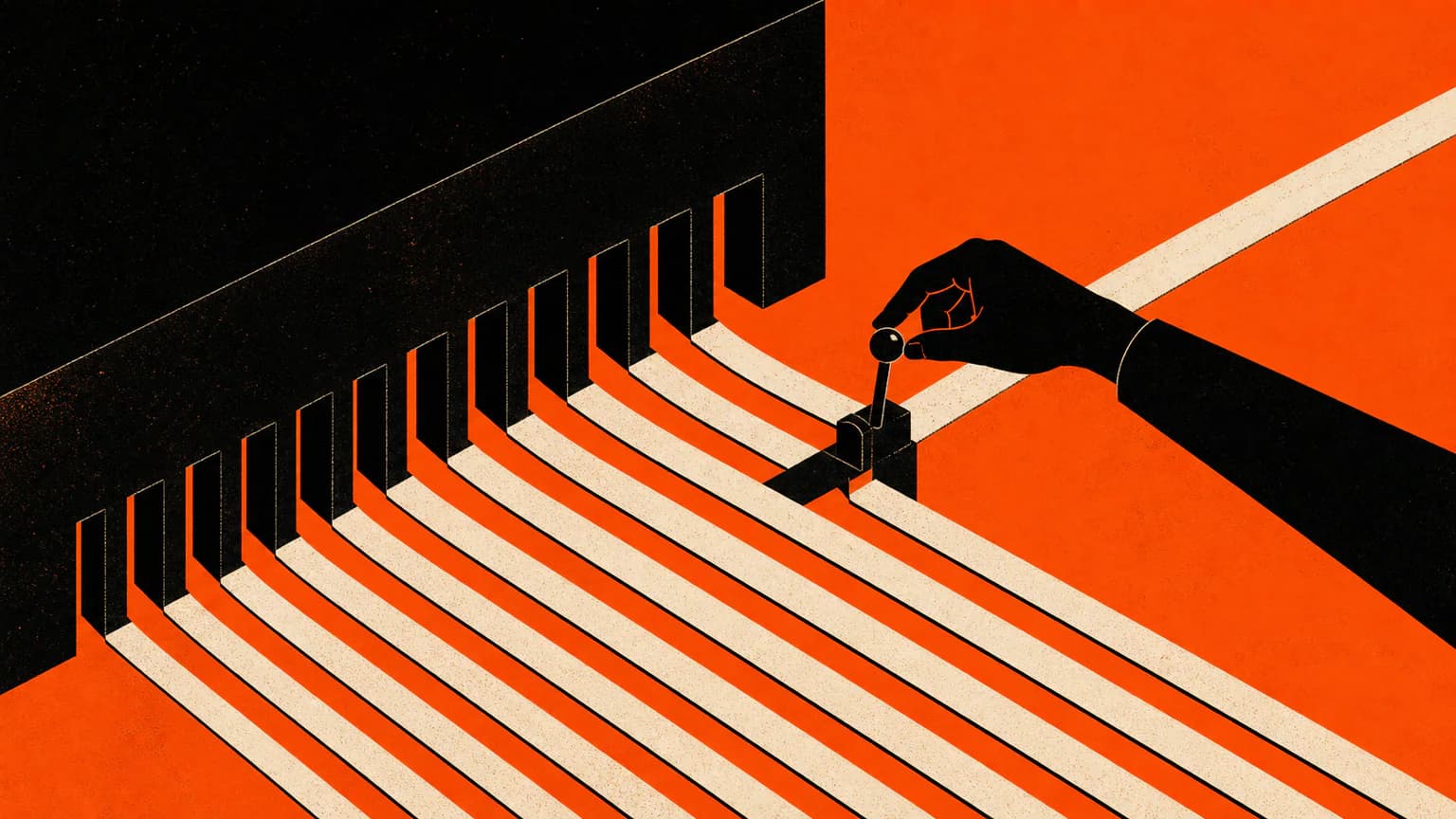
Choose Orange Impact when the argument needs a recognizable silhouette and a more confrontational crop.
 Conceptual
Ready to use Bauhaus Signals?